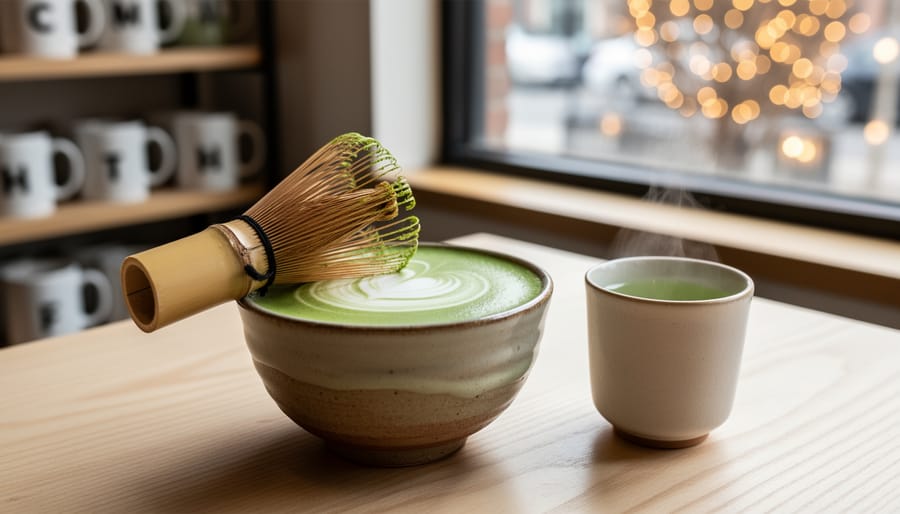
Making a great matcha morning drink takes just three minutes, a bamboo whisk or milk frother, and high-quality ceremonial-grade powder whisked into hot (not boiling) water or your choice of milk. Montreal’s sober-curious crowd has turned to matcha as the go-to ritual for morning energy without the alcohol or coffee jitters, and the city’s cafés have responded with creative takes on this centuries-old Japanese tradition.
Matcha Mornings has become more than a trend in 2026. It’s a lifestyle shift for young professionals who want sustained focus, a calm buzz, and something Instagram-worthy to sip during brunch catch-ups. The L-theanine in matcha delivers smooth, steady energy that lasts hours longer than espresso, making it perfect for those Saturday mornings when you need to stay sharp without the crash.
Whether you’re whisking your first bowl at home or hunting down the best matcha latte in the Plateau, this guide walks you through the full process. You’ll learn how to identify quality powder (colour and texture matter), master the traditional preparation technique, troubleshoot common mistakes like clumping or bitterness, and discover which Montreal spots are actually worth the trip. We’ve tested the recipes, visited the venues, and we’re sharing the insider details that turn a decent matcha into an exceptional one.
What You’ll Need: Tools and Ingredients
Finding Quality Matcha in Montreal
Montreal’s matcha scene has exploded in recent years, making quality powder easier to find than ever. Your best bet? Head to specialty tea shops in the Plateau or Mile End neighborhoods where staff actually know their ceremonial from their culinary grade.
Camellia Sinensis on Emery Street stocks Japanese ceremonial-grade matcha that’s perfect for morning lattes, it’s vibrant green and smooth enough to drink without sweetener. For budget-conscious matcha lovers, Kusmi Tea locations across downtown offer solid mid-range options that work beautifully in iced drinks.
Online, David’s Tea delivers locally within 24 hours and their organic matcha hits that sweet spot between quality and price. If you’re serious about your morning ritual, consider ordering directly from Cha Noir in the West Island, they import small batches from specific Japanese farms and the difference shows.
Here’s the insider tip: ceremonial grade for hot, traditional matcha; latte grade (sometimes called café grade) for milk-based drinks where the matcha flavor gets mellowed anyway. Don’t waste premium powder on sweetened iced lattes, save it for when you want to taste pure matcha magic.
Before You Start: Important Tips and Safety Notes
Before you whisk your first cup, a few quick considerations will save you from the most common matcha mistakes and help you get the most from your morning ritual.
Water temperature matters more than you’d think. You want water between 160-175°F (70-80°C), hot enough to dissolve the powder but cool enough to preserve matcha’s delicate flavor compounds. Boiling water scorches the leaves, leaving you with a bitter, metallic taste instead of that smooth, grassy sweetness. If you don’t have a thermometer, just let boiled water sit for two minutes before using it.
Store your matcha like the delicate product it is. Once opened, keep it in an airtight container in the fridge, away from light and moisture. Matcha oxidizes quickly, losing its vibrant color and nutritional punch within a month or two. That fancy tin it came in? Not enough. Transfer it to a sealed jar or use the original packaging only if you’re going through it fast.
Portion control is straightforward: one to two grams (about half a teaspoon to a full teaspoon) per serving is the sweet spot for morning drinks. More won’t make you more alert, it’ll just taste muddy and might upset your stomach on an empty stomach.
Step-by-Step: Three Morning Matcha Recipes
Classic Hot Matcha
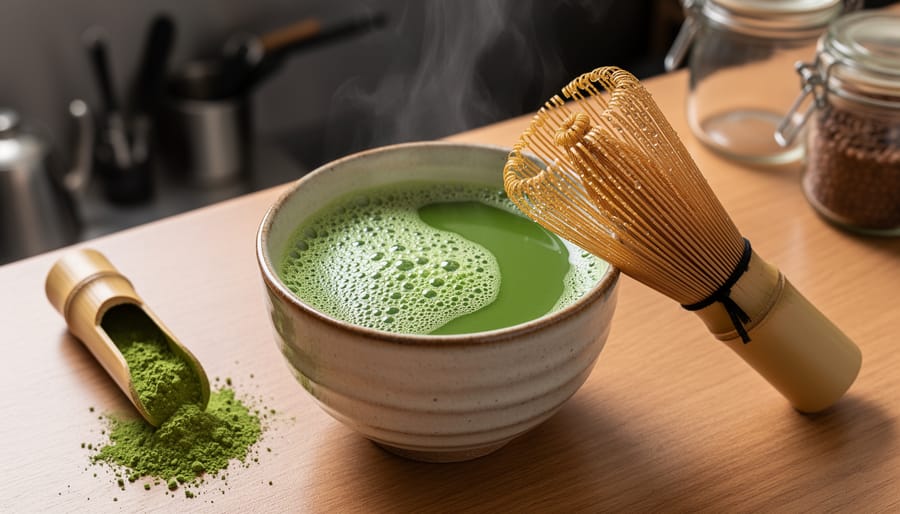
Start with one teaspoon of culinary-grade or ceremonial matcha powder sifted into your bowl, this eliminates lumps before you even add water. Heat water to 175°F (80°C), not boiling, which scorches the delicate leaves and creates bitterness. If you don’t have a thermometer, bring water to a boil then let it cool for two minutes.
Pour 2 ounces of hot water over the matcha and grip your bamboo whisk vertically. Move it rapidly in a zigzag or M-pattern motion, not circular stirring, keeping the tip against the bowl’s bottom. Whisk vigorously for 15 to 20 seconds until a fine foam forms across the surface. The texture should resemble microfoam on a latte, with tiny uniform bubbles rather than large airy pockets.
Once frothy, add another 4 to 6 ounces of hot water depending on your strength preference. Whisk gently for five more seconds to incorporate. The result should be bright green with a smooth, slightly thick consistency and a persistent foam layer that doesn’t disappear immediately.
If your matcha tastes grassy or vegetal rather than slightly sweet and umami-rich, your water was too hot or you under-whisked. Adjust next time and you’ll nail the classic Montreal café experience at home.
Iced Matcha Latte
Start with cold milk in a tall glass filled with ice, about 8 ounces of whatever you prefer. Whole milk creates the creamiest texture, but oat milk froths beautifully and adds subtle sweetness that complements matcha’s earthy notes. Almond milk works too, though it separates faster in cold drinks.
In a separate bowl or shaker, combine 1-2 teaspoons of matcha powder with 2 ounces of room-temperature water. Whisk vigorously or shake hard for 30 seconds until completely smooth and slightly frothy. This step matters because cold liquid won’t dissolve matcha properly, leaving you with chalky clumps.
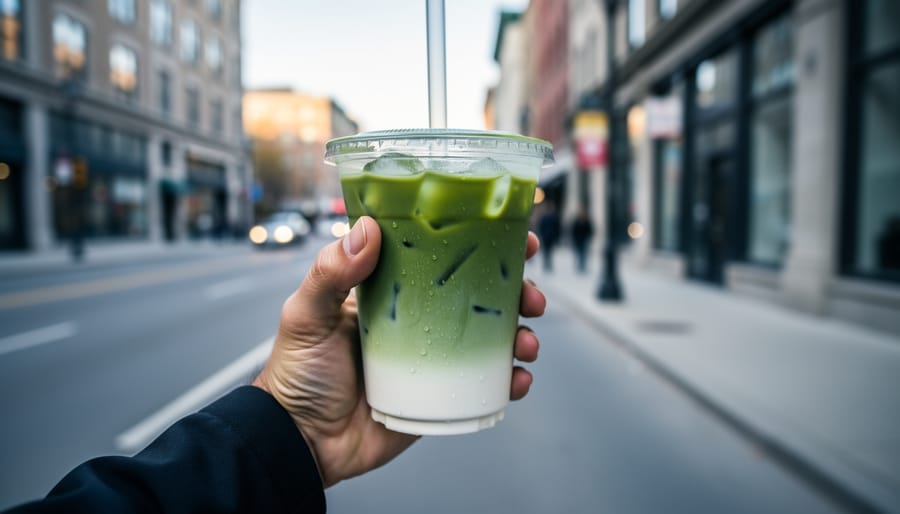
For the signature layered look Montreal cafés do so well, pour your whisked matcha slowly over the back of a spoon onto the milk. The matcha will sit on top in distinct green layers, creating that Instagram-ready gradient before you stir. If you skip the presentation and just want your drink fast, pour directly and give it a quick stir.
Add sweetener to taste, a teaspoon of maple syrup or honey works, though many find the natural sweetness of oat milk eliminates the need entirely. The result should taste smooth and refreshing, not gritty, with balanced sweetness that lets the matcha shine through.
Montreal Maple Matcha
Start with 1 teaspoon of matcha powder sifted into your bowl or cup, this prevents those frustrating clumps that ruin the texture. Add 2 ounces of hot water (around 175°F) and whisk vigorously in a zigzag motion until you get that signature foam on top, about 15-20 seconds of solid whisking.
Now for the Montreal magic: drizzle in 1 tablespoon of pure Quebec maple syrup while the matcha is still hot. The warmth helps the syrup dissolve evenly, creating a seamless blend rather than a sticky pool at the bottom. Use amber or dark maple syrup for deeper flavor, the robust notes complement matcha’s earthy profile better than the delicate golden grade.
Pour in 6-8 ounces of steamed milk (dairy or oat milk works beautifully here). If you’re going iced, let the whisked matcha cool for a minute, add the maple syrup, stir thoroughly, then pour over ice and top with cold milk. The trick is stirring the maple in before adding cold liquid, or it won’t incorporate properly.
The result should taste balanced, you get matcha’s grassy depth up front, followed by maple’s warm, caramel-like sweetness that rounds out any bitterness. It’s noticeably sweeter than traditional matcha but not cloying, with a distinctly Quebec character that coffee shops across Montreal have embraced. Adjust the maple to your preference, starting conservative since you can always add more but can’t take it back.
How to Tell If You Nailed It: Taste, Texture, and Quality Checks
You’ll know your matcha is on point when it hits all the right marks, starting with that vibrant jade-green color. If your drink looks dull or brownish, your powder might be stale or you burned it with water that’s too hot. Quality matcha should glow with an almost neon brightness that screams freshness.
Texture-wise, look for a thin layer of microfoam sitting on the surface, almost like what you’d see on a well-pulled espresso. This frothy cap proves you whisked properly, incorporating air without leaving chunks behind. Run your spoon through it, the liquid underneath should feel silky and uniform, never gritty or grainy. If you’re getting clumps floating around, you either skipped sifting or didn’t whisk long enough in that zigzag motion.
Taste is where things get interesting. Your first sip should hit with a sweet, grassy flavor that’s earthy but not muddy, with just a whisper of natural bitterness at the finish. Think vegetal and oceanic, not lawn clippings. If it tastes straight-up bitter or astringent, you either used boiling water (rookie move) or your powder’s past its prime. Weak, watery flavor means you went too light on the matcha or too heavy on the liquid.
The aftertaste matters too. Quality matcha leaves a pleasant, slightly sweet finish called umami that lingers without that chalky feeling cheap versions leave behind. If your mouth feels coated or weirdly dry, that’s low-grade powder talking.
Where to Get Your Matcha Fix in Montreal
Montreal’s matcha scene has exploded, and you don’t need to venture far to find a stellar morning drink. Here’s where the city’s caffeine-curious crowd goes for their green fix.
Cha Noir in the Plateau nails the fundamentals. Their ceremonial-grade matcha latte arrives perfectly whisked with your choice of oat or almond milk, and the baristas actually know proper water temperature. Hit them weekday mornings before 9 AM to skip the line. They’re among Montreal’s iconic breakfast spots for good reason, pair your matcha with their sesame croissant.
Café Kitsuné in Old Montreal brings Japanese precision to every cup. Their iced matcha with house-made vanilla syrup tastes like summer, even in February. Weekend brunch gets packed by 10:30, so plan accordingly or grab takeout and walk the cobblestones.
Head to Santropol for a more bohemian vibe and what might be the city’s best maple matcha latte, thick, frothy, and genuinely local in flavor. The garden patio opens in spring, making it perfect for slow mornings.
Crew Collective & Café in Old Royal Bank serves matcha in what feels like a cathedral. The Instagram factor is real, but the drink quality backs it up. Their hot matcha comes traditionally prepared in a proper chawan bowl.
Over in Mile End, Dispatch Coffee keeps things simple and excellent. No fancy twists, just clean matcha execution that appeals to purists. The Mile End morning cafés understand the assignment, quality over quantity.
These spots join the ranks of must-try Montreal restaurants pushing the city’s drink culture beyond booze, one whisked cup at a time.
Common Questions About Morning Matcha
Does matcha have as much caffeine as coffee?
A typical serving of matcha contains about 70mg of caffeine compared to coffee’s 95mg, making it a gentler morning option. The real difference? Matcha’s caffeine releases slowly alongside L-theanine, an amino acid that creates calm focus instead of coffee’s jittery spike. You get sustained energy without the mid-morning crash, perfect for powering through Montreal’s unpredictable workdays.
When’s the best time to drink matcha in the morning?
Drink your matcha 30-45 minutes after waking up, not immediately. Your body naturally produces cortisol first thing in the morning, and adding caffeine right away can interfere with that rhythm. By waiting a bit, you let your natural wake-up process kick in before the matcha boost takes over. This timing works brilliantly with Montreal’s brunch culture, perfect alongside your bagel at St-Viateur.
Can I prep matcha the night before?
Don’t. Matcha oxidizes quickly once prepared, losing its vibrant color and developing a bitter, metallic taste within hours. Always whisk it fresh each morning, it only takes two minutes. You can, however, portion out your powder the night before in a small container, and keep your milk or alternative chilled and ready to go.
What can I mix with matcha besides milk?
Matcha plays well with oat milk, almond milk, or coconut milk for creaminess. Add maple syrup for sweetness (very Montreal), vanilla extract for depth, or a pinch of cinnamon for warmth. Some Mile End cafés even blend in cardamom or lavender. Avoid acidic juices like orange, they clash with matcha’s grassy notes and can curdle dairy alternatives.
Matcha has carved out its own space in Montreal’s morning scene, proving you don’t need booze or even coffee to feel energized and social. Whether you’re whisking up a maple-sweetened version at home or discovering a new favorite spot in the Plateau, matcha fits perfectly into the city’s growing appetite for mindful, intentional rituals. It’s become the drink of choice for those who want to start their day with focus and flavor, without the jitters or the hangover. So grab your bamboo whisk, plan a morning outing to one of Montreal’s top matcha cafés, and see why this green powder has become the ultimate non-alcoholic morning ritual.